A mark around a plug-in air freshener is a reason to check the device and outlet before buying another refill. A visible spill, a damaged finish and an electrical warning sign need different responses. Do not assume that discoloration around a socket is harmless fragrance residue.
This guide compares placement and product instructions. It does not measure deposition, establish how common complaints are or certify an outlet’s condition.
Distinguish a spill from an electrical warning
The Electrical Safety Foundation’s warning-sign guidance identifies discolored or warm outlets, buzzing and burning smells as reasons to have a qualified electrician inspect the system. If those signs are present, stop using the affected outlet and arrange inspection. Do not move the fragrance device elsewhere merely to hide the mark or test whether the problem returns.
For visible liquid, stop using the affected device and follow its manufacturer’s instructions. Do not spray cleaner into an outlet or wet-clean an energized socket. Surface-cleaning advice is not electrical inspection advice, and a photograph cannot establish that a suspicious mark is only oil.
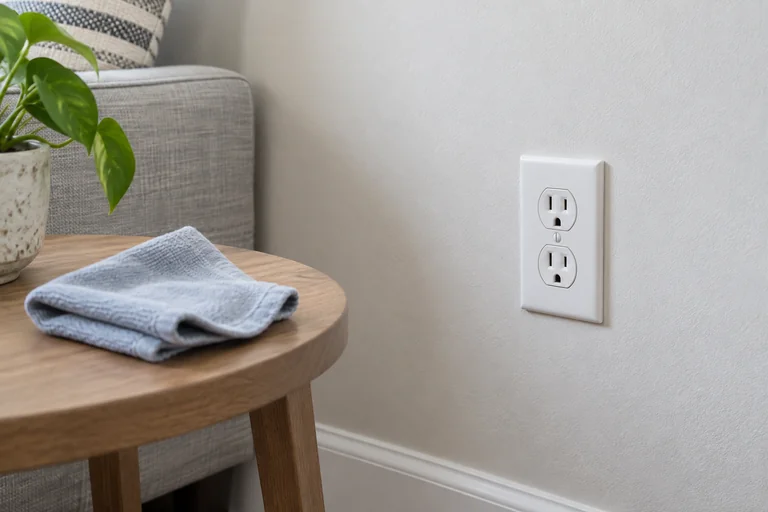
Use the instructions for the actual plug-in
Bath & Body Works’ Wallflowers usage reference says to keep the plug and refill upright. It warns that the fragrance oils may damage finished surfaces and some plastics, and specifies 12 inches of clearance above its plug. That clearance belongs to this product’s instructions; do not apply it automatically to every brand.
The same reference describes an overheating shutoff that disables a Wallflowers plug. This is a maker-described feature, not permission to continue using a damaged device or ignore outlet warning signs.
These details change the buying decision before scent choice does. An outlet immediately below a finished shelf may be unsuitable for the required clearance. A plug obscured by furniture may be difficult to inspect or access. Check the intended orientation and surrounding surfaces rather than choosing whichever socket is least visible.
Compare the location before buying refills
| Question | What to verify | Buying implication |
|---|---|---|
| Can the refill remain upright? | The actual plug’s orientation instructions | Outlet fit must work with the device |
| Is there enough clearance? | Brand-specific spacing and nearby shelves or finishes | Reject a location that cannot meet the instructions |
| Can you inspect and access it? | Furniture, curtains and other obstructions | A convenient scent location must also be usable |
| Is the refill compatible? | Exact device and refill system | Similar-looking bottles are not interchangeable by assumption |
| Has liquid escaped? | Container condition and maker guidance | Resolve the fault before purchasing more fragrance |
For a liquid-leak concern away from the outlet, our diffuser leak guide separates container leaks from placement and furniture damage.
When another format is a better purchase
A plug-in earns its place when you want ongoing room fragrance and have a suitable outlet that meets its instructions. If no such location is available, compare another format in our budget room-fragrance guide .
A manually used room spray removes the need for an operating plug-in at that location, but still needs its own surface and use instructions. A reed diffuser introduces a liquid container and placement requirements. Neither is a universal promise of mark-free finishes. Choose the format whose handling you can accommodate, and resolve an existing outlet problem independently of the next fragrance purchase.